
Description
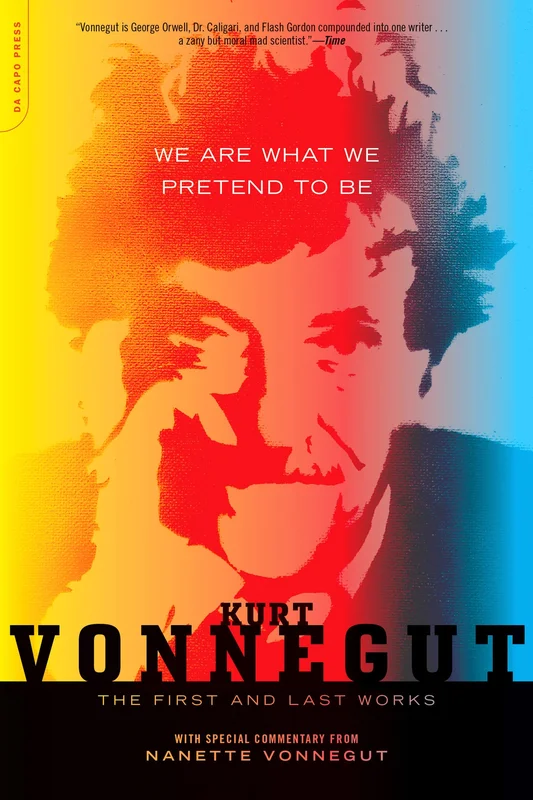
Called “our finest black-humorist” by The Atlantic Monthly,Kurt Vonnegut was one of the most influential writers of the 20thcentury. Now his first and last works come together for the first timein print, in a collection aptly titled after his famous phrase, We Are What We Pretend To Be.
Written to be sold under the pseudonym of “Mark Harvey,” Basic Trainingwas never published in Vonnegut’s lifetime. It appears to have beenwritten in the late 1940s and is therefore Vonnegut’s first evernovella. It is a bitter, profoundly disenchanted story that satirizesthe military, authoritarianism, gender relationships, parenthood andmost of the assumed mid-century myths of the family. Haley Brandon, theadolescent protagonist, comes to the farm of his relative, the old crazywho insists upon being called The General, to learn to be astraight-shooting American. Haley’s only means of survival will lead himto unflagging defiance of the General’s deranged (but oh so American,oh so military) values. This story and its thirtyish author were nofriends of the milieu to which the slick magazines’ advertisers werepitching their products.
When Vonnegut passed away in 2007, he left his last novel unfinished. Entitled If God Were Alive Today,this last work is a brutal satire on societal ignorance and carefreedenial of the world’s major problems. Protagonist Gil Berman is amiddle-aged college lecturer and self-declared stand-up comedian whoenjoys cracking jokes in front of a college audience while societaldependence on fossil fuels has led to the apocalypse. Described byVonnegut as, “the stand-up comedian on Doomsday,” Gil is a characterformed from Vonnegut’s own rich experiences living in a reality Vonneguthimself considered inevitable.
Along with the two works of fiction, Vonnegut’s daughter, Nanette shares reminiscences about her father and commentary on these two works—both exclusive to this edition.
In this fiction collection, published in print for thefirst time, exist Vonnegut’s grand themes: trust no one, trust nothing;and the only constants are absurdity and resignation, which themselvescannot protect us from the void but might divert.



Reviews
There are no reviews yet.